Welcome to Plan-EO
Plan-EO (pronounced "plan-ei-oh") is the Planetary Child Health and Enterics Observatory, an interdisciplinary research initiative based at the University of Virginia School of Medicine.
OUR VISION
We bring together evidence about the spread of deadly enteric pathogens for geographical targeting of life-saving child health interventions, such as new vaccines.
We do this through statistical modeling and knowledge synthesis.
Where do kids get sick and why?
Diarrheal diseases don’t spread randomly. Plan-EO brings together data from thousands of children worldwide to uncover the spatial patterns behind enteric infections.

How does the climate drive the spread of diseases?
Rainfall, temperature, land use, and sanitation all impact the spread of infections. We connect environmental and climate data to child health outcomes across broad regions of the globe.

Filling the gaps in disease maps
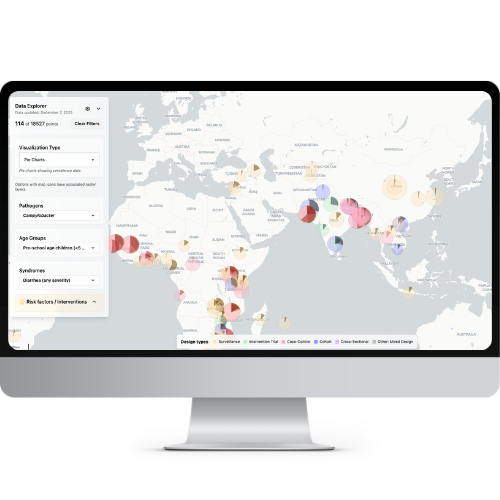
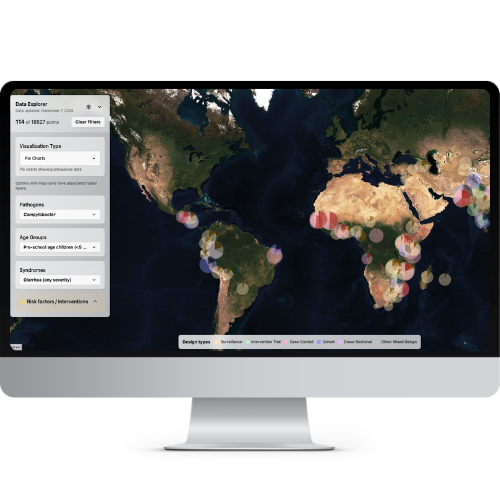
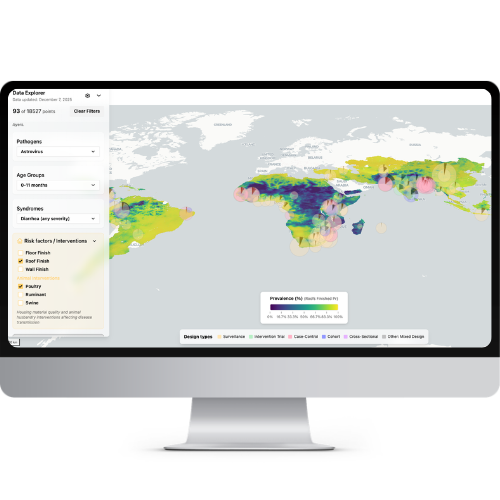
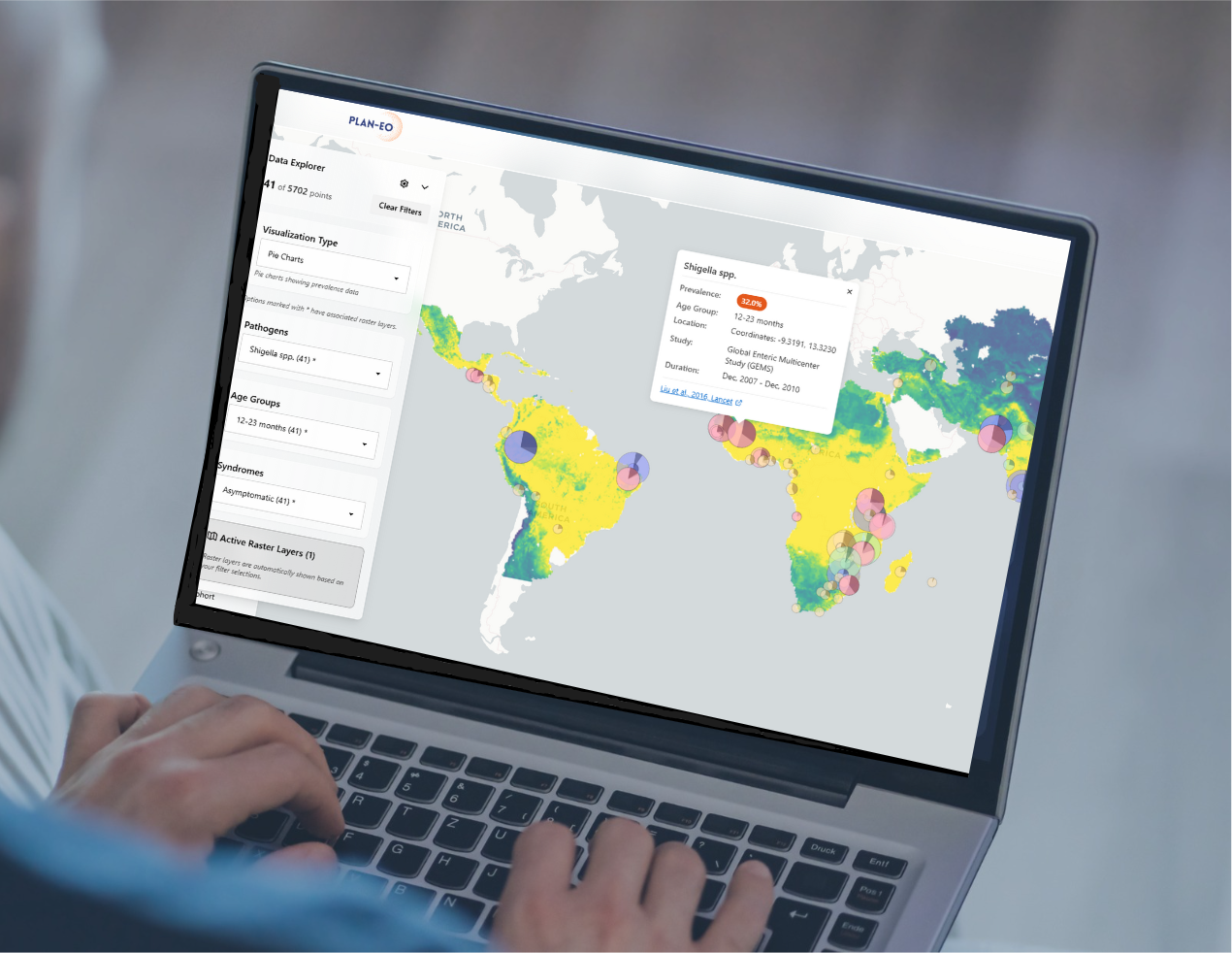
At Plan-EO, we compile information from diverse sources and feed it into statistical models. The results are interactive maps, showing where disease risk is highest, and how it changes over time.

Better evidence, smarter action, healthier kids
By identifying hotspots and high-risk populations, Plan-EO aims to help guide vaccines, sanitation improvements, and other interventions to where they can make this biggest impact on the lives of children and their families.

HOW WE DO IT
We produce, curate, and share spatial data relating to the transmission of diarrhea-causing pathogens affecting children in the Global South. By combining diagnostic results with climate, environmental, and sociodemographic information, we generate high-resolution evidence to support research, planning, and intervention targeting.
Step 1:
Compile child health microdata
We aggregate georeferenced, molecular diagnostic data from biological samples collected in epidemiological studies of young children in tropical and sub-tropical regions, harmonizing results across sites, pathogens, and study designs.
Step 2:
Linking disease to environment and society
We link each observation with climate, environmental, and sociodemographic data, such as rainfall, temperature, land cover, and sanitation, to understand the conditions that lead to infections.
Step 3:
Modeling risk and sharing findings
We use spatial and geostatistical models to generate pathogen-specific risk estimates and prediction maps, which we disseminate through interactive dashboards and openly available spatial data products.